

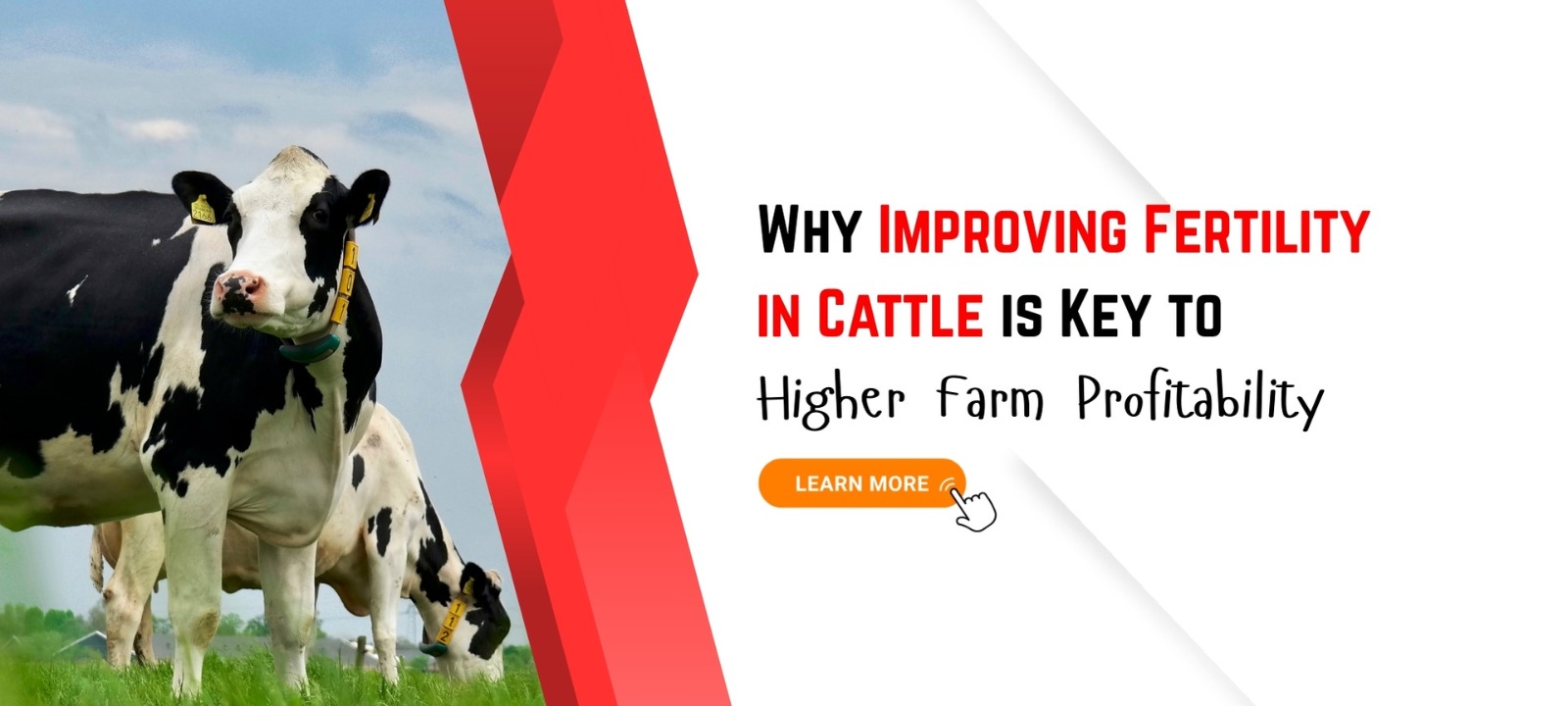
Cattle farming has always been at the heart of agricultural communities, not only because it provides a source of milk and dairy products but also because healthy herds are central to rural livelihoods and farm sustainability. Among the many factors that influence success in dairy and cattle farming, fertility stands out as one of the most decisive. Fertility is the foundation upon which future productivity is built. If cows are not reproducing efficiently, the entire cycle of milk production, herd growth, and genetic advancement becomes disrupted. This is why improving fertility in cattle is not just about biological health but also about ensuring consistent profitability for farmers. A fertile herd guarantees more calves, better milk yields, and reduced costs in maintaining non-productive animals, all of which directly add to a farmer’s income.
The Link Between Fertility and Farm Profitability
When discussing profitability in cattle farming, the connection with fertility is immediate and undeniable. Each calf born not only represents a new generation but also ensures that the cow returns to peak milk production after calving. The shorter the gap between calving intervals, the greater the lifetime productivity of the cow. Farms with high fertility rates can produce more calves to either expand their herds or sell to other farmers, creating an additional revenue stream. At the same time, reproductive efficiency reduces the time and resources spent on cows that are not contributing to milk output. Essentially, fertility enhances the return on every rupee invested in feeding, housing, and managing the herd.
Challenges in Maintaining Fertility
Despite its importance, maintaining high fertility levels in cattle is not always straightforward. Factors such as poor nutrition, inadequate herd management, exposure to disease, and climatic stresses can all play a role in lowering conception rates. In many farms, late detection of heat cycles or delays in insemination significantly reduce the chances of successful pregnancies. Moreover, genetic factors also influence reproductive performance, meaning that fertility is partly inherited and requires careful breeding strategies to improve over time. Without addressing these challenges, farmers face longer calving intervals, declining milk production, and reduced profitability. This makes it clear why improving fertility in cattle must remain a priority for modern dairy farms.
Nutrition as the Cornerstone of Fertility
Among all factors influencing fertility, nutrition is perhaps the most critical. A cow’s body must have sufficient energy, protein, vitamins, and minerals to maintain both milk production and reproductive health. Deficiencies, particularly in trace minerals such as selenium, copper, and zinc, can lead to silent heat cycles, early embryonic loss, and delayed conception. Equally important is providing adequate body condition before calving because undernourished cows often take longer to return to reproductive cycles after giving birth. Balanced rations, access to quality forage, and proper supplementation go a long way in supporting fertility. By investing in nutrition, farmers not only boost milk yield but also improve the chances of timely pregnancies, which keeps the production cycle running smoothly.
Herd Management Practices That Enhance Fertility
Beyond nutrition, good management practices are essential in securing high fertility. Detecting heat signs on time and inseminating cows at the correct moment greatly increases conception rates. Farmers who use systematic heat detection methods, such as activity monitors or visual observation, generally see better results. Proper housing, stress reduction, and disease control also play an important role, as cows under stress or poor health rarely exhibit strong fertility performance. Regular veterinary check-ups and vaccination schedules further reduce reproductive disorders. Good record keeping allows farmers to track calving dates, insemination attempts, and pregnancy results, which makes it easier to plan for improvements. Taken together, these practices build a strong foundation for improving fertility in cattle and, in turn, for sustaining profitability.
Genetic Selection and Fertility Improvement
Genetics also has a powerful influence on cattle fertility. Selecting bulls and cows with proven fertility traits ensures that the herd gradually becomes more efficient at reproducing. Artificial insemination programs have made it easier for farmers to access high-quality genetics, enabling them to introduce desirable traits such as better reproductive performance, higher milk yield, and disease resistance. Over time, careful breeding choices can significantly raise herd fertility levels and reduce reproductive losses. While genetics may take longer to show results compared to nutrition or management interventions, it remains a vital long-term strategy for improving farm profitability through sustained reproductive success.
Economic Gains from Fertility Improvements
The economic impact of higher fertility cannot be overstated. Every day that a cow remains open beyond her ideal calving interval translates into lost income for the farmer. Studies have shown that cows with shorter calving intervals produce more milk over their lifetime, and their replacement calves also carry forward the genetic advantage. Higher fertility means fewer inseminations per pregnancy, reducing breeding costs. It also leads to better use of farm infrastructure, as more productive cows reduce the burden of unproductive maintenance. For small and medium farmers especially, these savings and added outputs make the difference between merely sustaining the farm and achieving genuine profitability.
The Role of Farmer Awareness and Training
Another crucial aspect of fertility improvement lies in farmer awareness and education. Many farmers may not realize the financial impact of delayed calving or poor conception rates. Training programs that teach effective heat detection, balanced feeding, and record keeping can transform herd outcomes. Knowledge-sharing between farmers, veterinarians, and dairy experts ensures that best practices reach even smaller farms. As farmers adopt improved methods, the collective benefit strengthens the dairy industry as a whole. Thus, farmer training should be seen as a long-term investment in both productivity and profitability.
Looking Ahead: Sustainability Through Fertility
As global demand for dairy continues to rise, sustainable farming practices will become even more important. Fertility is at the core of sustainability because it ensures that cows are productive throughout their lifespan, reducing wastage of resources. Healthy, fertile cows also require fewer veterinary interventions, use feed more efficiently, and contribute positively to the farm’s overall output. By focusing on fertility, farmers not only enhance their immediate earnings but also secure the long-term viability of their operations. This positions fertility as a cornerstone of sustainable dairy farming.
Final Thoughts
Fertility is the foundation on which cattle farming profitability is built. A cow that reproduces efficiently not only sustains milk production but also contributes to the steady growth and stability of the herd. For farmers, this means more calves, shorter calving intervals, higher milk yields, and ultimately a stronger financial outcome. While nutrition, genetics, health, and management all play their part, it is the combination of these factors that leads to lasting improvement. By giving fertility the attention it deserves, farmers can reduce costs, increase productivity, and secure long-term sustainability. In the end, improving fertility in cattle is not simply an animal health goal but one of the most important strategies for ensuring higher farm profitability and future success.
If you are a farmer, dairy entrepreneur, or livestock manager looking for a reliable dairy consultant to help you improve herd fertility, enhance milk production, and build a sustainable breeding program, Accuvance India is your trusted partner in achieving these goals. With our expertise in advanced reproductive technologies, genomic testing, and customized farm solutions, we work side by side with farmers to design strategies that improve fertility outcomes and drive long-term profitability. Our approach combines scientific precision with practical field knowledge, ensuring that every farm we partner with achieves measurable progress. By choosing Accuvance India, you gain a dedicated ally committed to advancing your herd’s productivity, strengthening your farm operations, and helping you secure a more profitable and sustainable future.