

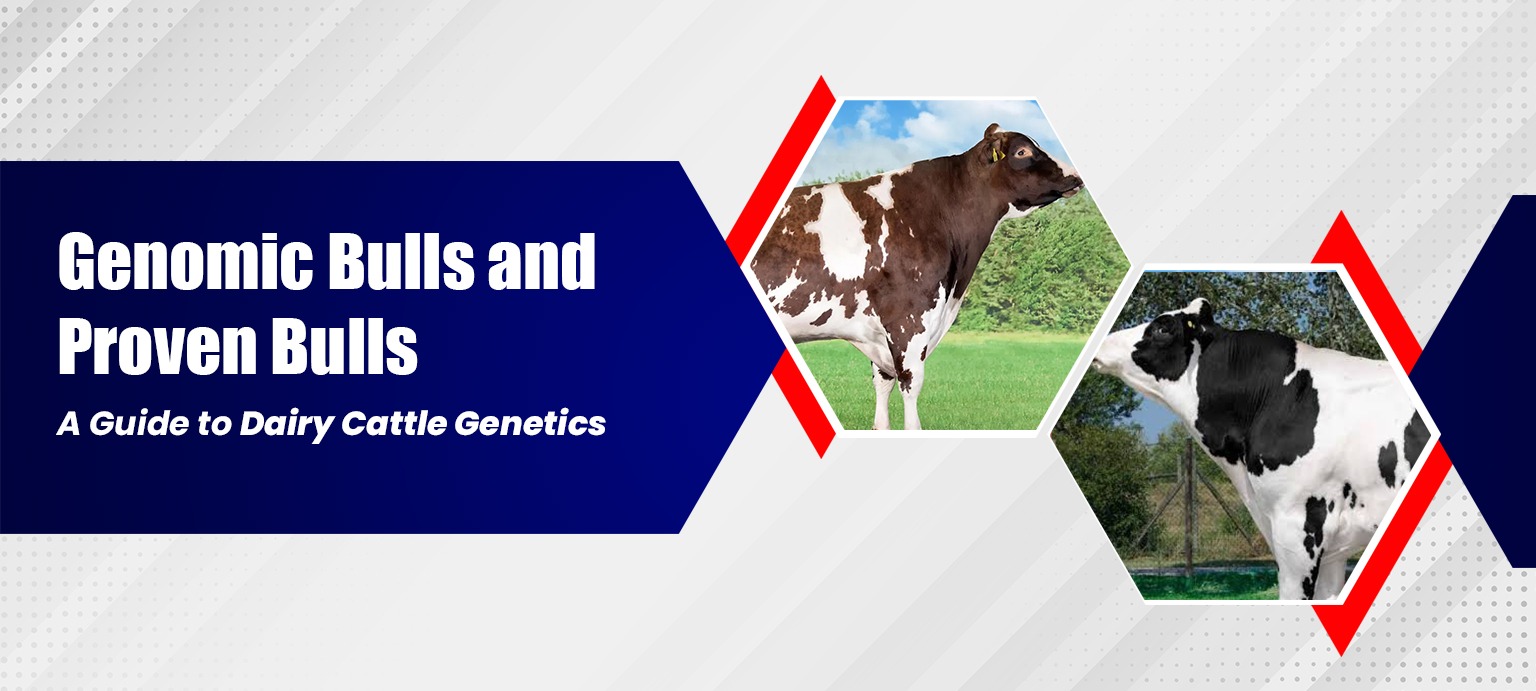
Choosing suitable bull genetics is an important part of dairy cattle breeding. The genetics selected today can influence the traits seen in future generations of the herd. Genomic bulls and proven bulls are two options used in modern breeding programmes, but they are evaluated using different types of information. Understanding how they differ can help dairy farmers make breeding decisions based on their herd goals and the traits they want to improve.
What Is a Genomic Bull?
A genomic bull is generally a young bull whose genetic potential is estimated using genomic information. Genomic testing looks at DNA markers and combines this information with pedigree and other available records to estimate breeding values for different traits. Because this information can be available at a young age, promising bulls can be evaluated before they have a large number of offspring.
What Is a Proven Bull?
A proven bull has genetic information supported by the performance records of its offspring. In progeny testing, a bull is used for breeding and information from its daughters and other offspring is collected and evaluated. This provides additional evidence about how the bull’s genetics are expressed in the next generation. As a result, proven bulls have a breeding record that includes observed progeny information.
Genomic Bulls vs Proven Bulls
The main difference between genomic bulls and proven bulls is the information available for their genetic evaluation. Genomic bulls can be evaluated at a younger age using genomic information, while proven bulls have additional information from offspring performance. Genomic selection can help reduce the time needed to identify animals with promising genetic potential, while progeny testing requires time for offspring to be born, raised and evaluated. Both approaches can be part of a structured dairy breeding programme.
Why Is Genomic Selection Used in Dairy Cattle Breeding?
Traditional progeny testing takes time because offspring need to be born and reach an age at which useful performance information can be collected. Genomic selection provides additional information about an animal much earlier. This can allow breeding organisations to identify promising young bulls sooner and shorten the generation interval. Research in dairy cattle breeding has found that genomic selection can increase the rate of genetic progress when it is used appropriately within a breeding programme.
Why Are Proven Bulls Important?
Proven bulls continue to have an important role because their genetic evaluation can include information from their offspring. This gives breeders observed performance data that can support the assessment of a bull’s genetic potential. Progeny testing has traditionally been an important part of dairy cattle breeding, and information from daughters can provide useful evidence as more performance records become available. The reliability of genetic evaluations can also change as additional information is added over time.
What Traits Should Be Considered When Selecting a Bull?
Bull selection should be based on the breeding goals of the herd rather than on one trait alone. Depending on the breeding programme, farmers may consider milk production, milk fat and protein, fertility, productive life, health-related traits, calving traits, breed characteristics and genetic diversity. The importance of each trait can differ between herds, so the selection criteria should match the specific requirements of the animals and the long-term breeding plan.
How Does Genomic Testing Support Bull Selection?
Genomic testing provides information about an animal’s DNA and can be combined with pedigree and other records during genetic evaluation. This can help identify young animals with promising genetic potential before sufficient progeny information is available. For breeding organisations, this supports earlier selection of future sires and can help reduce the time between generations. However, genomic information should be considered along with the breeding objective, herd records, animal information and other relevant factors when selecting genetics.
Role of Genetics in Dairy Herd Improvement
Dairy cattle genetics can influence important traits that farmers consider when developing a herd. Genetic improvement is a long-term process because the results of breeding decisions become visible across future generations. Genomic information, genetic evaluations and reproductive technologies can be used together to support this process. The focus should be on selecting genetics that match the traits and breeding goals of the herd rather than choosing a bull simply because it is classified as genomic or proven.
Genomic Bulls and Proven Bulls in Modern Dairy Breeding
Modern dairy breeding combines genomic testing, genetic evaluation and reproductive technologies to support breeding decisions. Genomic bulls can be evaluated at a younger age using genomic information, while proven bulls have additional information from the performance of their offspring. Both can have a place in a structured breeding programme, depending on the available genetic information and breeding goals. Farmers should consider the traits they want to improve, the existing herd and the overall breeding plan before selecting bull genetics.
Factors to Consider Before Selecting Bull Genetics
Before selecting bull genetics, it is useful to understand the current status of the herd and decide which traits need attention. Farmers can review existing herd records, consider the breed or crossbreeding programme and compare the available genetic information. Other factors such as fertility, milk production, productive life and the genetic diversity of the herd may also be relevant. A planned approach can help ensure that the selected genetics support the breeding objectives of the farm.
Can Genomic and Proven Bulls Be Used Together?
Genomic and proven bulls do not necessarily need to be treated as separate choices within a breeding programme. A breeding strategy can include different types of bulls based on the objectives, genetic information and risk considerations of the herd. Genomic evaluations can provide earlier information about young bulls, while proven bulls can provide additional evidence from progeny performance. The important point is to assess the available information and select genetics that fit the overall breeding plan.
Role of Reproductive Technologies in Genetic Improvement
Genetic selection can be combined with reproductive technologies to support a planned breeding programme. Technologies such as Bovi-IVF can help in the development of future animals with selected genetic traits, while genomic testing can provide information about genetic potential. Accuvance also provides genetic management through GXpert and dairy consulting through DairyPro. These approaches can be considered together when developing a long-term plan for herd improvement.
Genomic Bulls vs Proven Bulls: What Should Farmers Remember?
The difference between genomic bulls and proven bulls mainly relates to how their genetic potential is evaluated. Genomic bulls can be assessed at a younger age using genomic information, while proven bulls have additional information from offspring performance. Neither term alone provides enough information to make a breeding decision. Farmers should look at the available genetic records, the traits they want to improve, the existing herd and their long-term breeding objectives before selecting suitable genetics.
Final Thoughts
Dairy cattle genetics is a long-term process that requires careful selection and planning. Genomic testing has made it possible to evaluate young animals earlier, while proven bulls continue to provide information based on observed offspring performance. Understanding these differences can help farmers and breeding professionals make more informed choices. The most suitable approach will depend on the breeding goals, available genetic information and requirements of each dairy herd.
Explore Dairy Genetics and Reproductive Solutions
Are you planning to improve your dairy herd through suitable genetics and reproductive technologies? Accuvance India provides solutions for dairy cattle breeding, including dairy genetics, imported genetics, bovine frozen semen, genomic testing, genetic management and assisted reproductive technologies. Our genetics range includes Holstein, Jersey, Sahiwal and Murrah, along with crossbreeding options and imported Holstein, Jersey and Gir genetics. We also offer Sexed Semen, Bovi-IVF, GXpert genetic management and DairyPro consulting services. Our solutions can be considered according to the breeding objectives and requirements of individual dairy herds. If you are looking to understand your herd’s genetic status, select suitable cattle genetics or explore reproductive technologies, Accuvance India can help you evaluate the available options and plan a suitable breeding approach.