

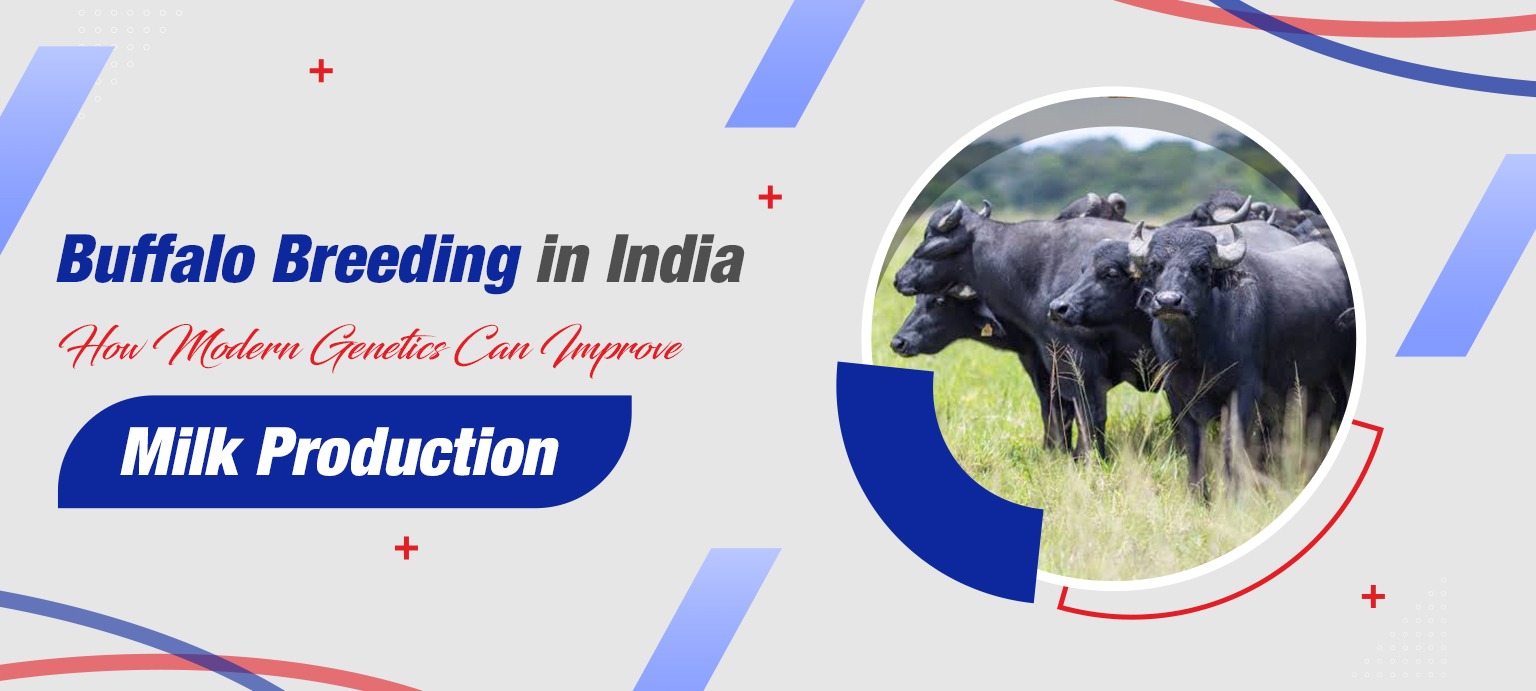
Buffalo milk holds an important place in India’s dairy sector, making good breeding decisions essential for long-term herd improvement. The genetics selected today can influence the productive potential of future generations. As farmers move towards more informed breeding methods, genetic selection is becoming an important tool for improving desirable traits in buffaloes. When combined with proper nutrition, reproductive care and herd management, modern breeding can support better milk production and overall herd performance.
Why Buffalo Breeding Matters in India
Buffaloes play an important role in India’s dairy sector, with milk production and herd improvement closely linked to good breeding decisions. Breeds such as Murrah have valuable traits related to milk production and adaptability. Careful genetic selection can help farmers maintain desirable characteristics while gradually improving overall herd performance from one generation to the next.
What Is Modern Buffalo Breeding?
Modern breeding blends old farming wisdom with new scientific tools. Farmers no longer rely only on how an animal looks or how much milk it gives right now. They also study family history, health records and reproductive performance. This wider view helps them pick animals more likely to pass on strong, useful traits to their calves.
Role of Genetics in Milk Production
Milk yield depends on many things working together, and genetics is one of the most important. It sets the upper limit of what an animal can produce, while feeding, health and daily care decide how close the animal gets to that limit. Good genetics paired with poor care rarely gives good results, and the same is true in reverse.
Choosing the Right Buffalo for Breeding
Picking a breeding animal takes more thought than judging size or appearance. Farmers look at milk output, fat content, calving history, body structure and how well related animals have performed over time. A bull matters even more than a single female, since its genes pass into dozens or even hundreds of calves through breeding programmes.
Importance of Murrah Buffalo Genetics
Murrah is one of India’s well-known dairy buffalo breeds and is widely valued for its milk production and adaptability. Farmers working with Murrah animals can benefit from thoughtful genetic selection, focusing not on one trait alone but on a balanced mix of milk quantity, milk composition, fertility and productive life.
Artificial Insemination in Buffalo Breeding
Artificial insemination has changed how buffalo herds are bred. It lets farmers use semen from proven bulls without keeping one on their own land. Success still depends on several small but important details: semen quality, correct heat detection, right timing and the skill of the person carrying out the procedure. Careful handling of semen also plays a big role.
How Sexed Semen Can Support Herd Improvement
Sexed semen adds another layer of control to breeding decisions. It raises the chance of getting a calf of the preferred sex, which is especially useful for farmers wanting more female calves to grow their milking herd. When paired with strong genetic selection, sexed semen helps farmers plan replacements with greater confidence and less guesswork.
Genetics and Milk Quality
Milk quantity gets most of the attention, but quality matters just as much. Buffalo milk is known for its higher fat and solid content compared to cow milk, and this trait is shaped by genetics too. Farmers who consider both yield and composition when choosing breeding animals end up with milk better suited to their market needs.
Genomic Testing and Buffalo Breeding
Genomic testing gives farmers a closer look at an animal’s genetic makeup. By studying specific genetic markers, this testing offers useful clues about traits an animal is likely to carry and pass on. Combined with regular performance records, genomic data supports smarter, more consistent decisions about which animals should shape the herd’s future.
Benefits of a Planned Breeding Programme
A planned breeding programme replaces guesswork with clear direction. Farmers set goals first, whether that means better milk yield, richer composition, stronger fertility or longer productive years, and then choose animals to match. This structured approach tends to bring steadier improvement over time compared to breeding decisions made without any long-term plan.
Nutrition Still Matters
No breeding programme can succeed on genetics alone. Feed quality, mineral balance, clean water and proper body condition all affect how well an animal performs. A buffalo with excellent genetic potential still needs good daily care to show that potential in the milking parlour. Breeding and nutrition work best when treated as partners, not separate efforts.
Keeping Proper Breeding Records
Detailed records turn scattered observations into useful knowledge. Tracking calving dates, milk yield, breeding dates, conception outcomes and calf performance over time reveals patterns that are easy to miss otherwise. These records help farmers decide with more certainty which animals to keep, which to breed again and which to gradually replace.
Building a Better Buffalo Herd
Indian buffalo breeding is shifting toward a more measured, data-informed approach. Farmers now have access to reproductive tools and genetic information that were out of reach not long ago. The real goal is not simply more calves each season, but calves with strong genetic promise, contributing to a herd that stays healthy, productive and sustainable over the years.
Final Thoughts
Genetics will not replace hard work, but it makes that work count for more. When breeding decisions are paired with sound nutrition, careful reproductive management and honest record keeping, farmers gain a clearer path toward steady, lasting improvement in their buffalo herds and the milk they produce.
Wondering how to bring this kind of planned, genetics-first approach into your own herd? Accuvance India works with dairy farmers across the country to make that shift practical, offering Murrah genetics alongside Holstein, Jersey and Sahiwal options, sex-sorted semen, Bovi-IVF, genomic testing and broader herd management support. Its sex-sorted semen line, AccuSort, is designed to produce 90%+ female calves while supporting planned breeding and herd replacement goals. Whether the goal is faster replacement of ageing animals, richer milk composition or simply a more organised breeding plan, Accuvance India brings genetics, reproductive technology and hands-on herd guidance together under one roof. Farmers exploring Murrah buffalo breeding, or looking to strengthen any part of their dairy genetics programme, can look into the AccuSort range here: https://accuvanceindia.com/sexed-semen-accusort. Better breeding decisions today shape a stronger, more productive herd for years to come, and having the right genetic partner along the way makes that journey a good deal easier.