

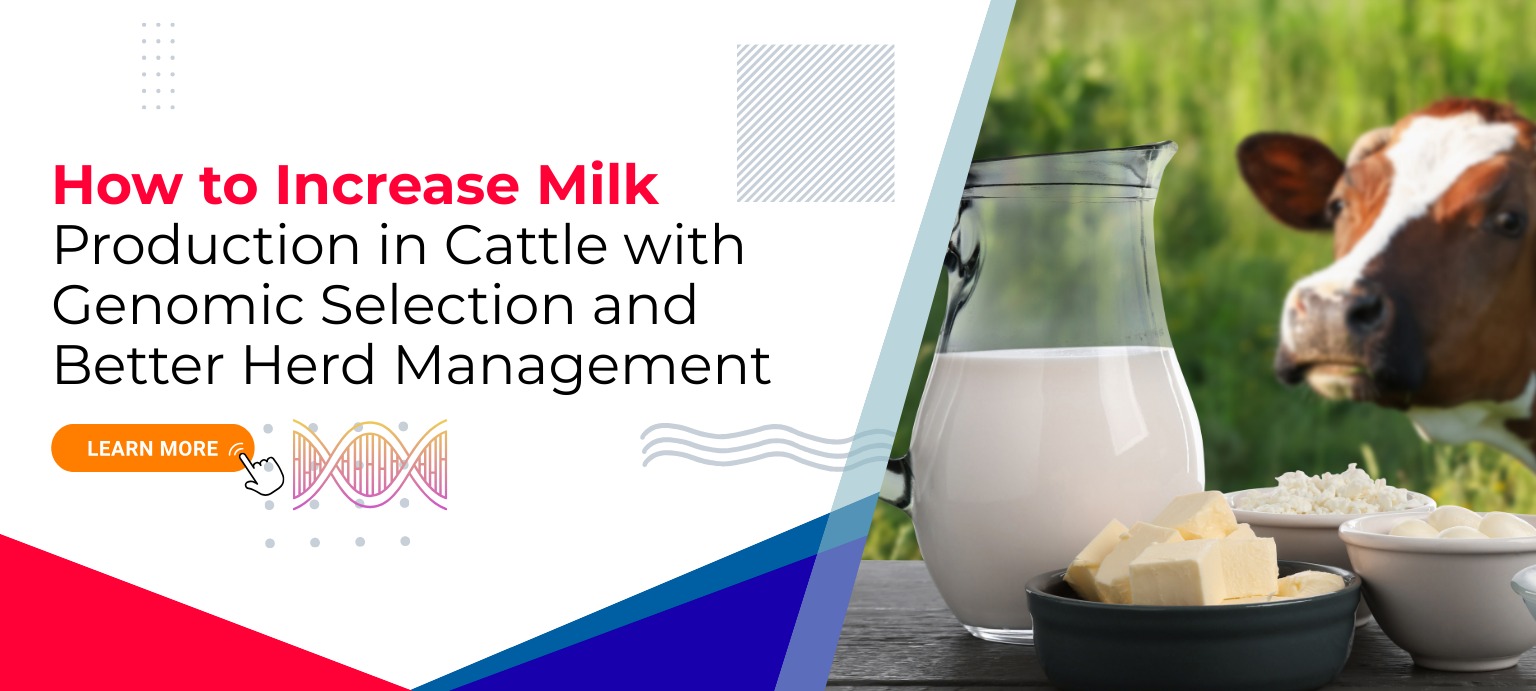
Improving dairy cattle has always been about making better choices generation after generation. Earlier, farmers depended mainly on physical traits and milk records, which often took years to show reliable results. Today, science allows us to look much deeper. By studying an animal’s genetic makeup at an early stage, breeders can predict future performance with far more confidence. This approach, known as genomic selection in dairy cattle, has reshaped how breeding decisions are made and has brought accuracy, speed, and long-term stability to dairy improvement programs.
Understanding Genomic Selection
Genomic selection is a method that uses DNA information to estimate the genetic potential of an animal. Instead of waiting for a cow to complete several lactations, scientists analyze thousands of genetic markers to understand traits such as milk yield, fertility, health, and longevity. In simple terms, it helps identify strong and weak genetic traits early in life. This early insight reduces uncertainty and allows breeders to make informed decisions long before traditional performance data becomes available.
Faster Genetic Progress Than Traditional Methods
One of the biggest advantages of this approach is speed. Conventional breeding relies heavily on progeny testing, which can take many years to confirm whether an animal truly passes on desirable traits. With genomic selection in dairy cattle, this waiting period is greatly reduced. Breeders can select superior animals at a young age, shortening the generation interval. Over time, this faster cycle leads to noticeable improvements in herd quality and consistency.
Improved Accuracy in Breeding Decisions
Accuracy plays a crucial role in dairy improvement. Selecting animals based only on appearance or limited records can lead to unpredictable outcomes. Genomic data provides a clearer picture of an animal’s true genetic value. By using genomic selection in dairy cattle, breeders can better predict traits related not only to production but also to health and adaptability. This accuracy helps avoid genetic setbacks and supports the development of balanced, well-performing herds.
Better Focus on Health and Functional Traits
Milk production is important, but long-term dairy success also depends on animal health, fertility, and lifespan. Genomic tools make it possible to select for traits such as disease resistance, calving ease, and feed efficiency. These traits are often difficult to measure through traditional methods alone. With genomic selection in dairy cattle, breeders can give equal importance to productivity and wellness, leading to healthier animals and reduced management challenges.
Economic Benefits for Dairy Farmers
Genetic improvement is closely linked to farm profitability. Healthier animals with better fertility and production efficiency require fewer interventions and lower maintenance costs. Early and accurate selection reduces the risk of investing in animals that may underperform later. Over time, herds developed using genomic selection in dairy cattle tend to show more predictable performance, helping farmers plan resources, manage risks, and maintain stable production levels.
Supporting Sustainable Dairy Farming
Sustainability has become a key concern in modern agriculture. Efficient animals that produce more with fewer resources contribute to a lower environmental footprint. Genomic tools allow breeders to select animals that convert feed more efficiently and adapt better to local conditions. By focusing on long-term genetic strength rather than short-term gains, genomic approaches support responsible and sustainable dairy farming practices.
The Role of Genomics in Future Dairy Improvement
As genetic databases grow and technology advances, the value of genomic information will continue to increase. Ongoing research is expanding the range of traits that can be accurately predicted, making breeding programs even more precise. The use of genomic selection in dairy cattle is expected to play a central role in shaping resilient herds that can meet future challenges related to climate, resources, and changing market demands.
Final Thoughts
Dairy improvement is no longer limited to what can be seen or measured over time. By unlocking information hidden within DNA, breeders gain a powerful tool to guide smarter decisions. The importance of genomic selection in dairy cattle lies in its ability to combine speed, accuracy, animal well-being, and sustainability into a single approach. As dairy farming continues to evolve, genomics will remain a key driver of responsible and effective genetic progress.
If you are a dairy farmer looking to improve breeding results and adopt genomic selection in dairy cattle, Accuvance India is your trusted partner for complete genetic and breeding solutions. We provide genomic testing to identify high-potential animals, along with advanced breeding services such as IVF, sexed semen, frozen semen, and elite imported genetics. Our services also include dairy advisory support to help farmers plan breeding programs that suit their herd and farm conditions. Our goal is to make modern breeding tools simple, affordable, and useful for everyday dairy farming. With our experience and technology, we help farmers move towards better genetics, healthier cows, and steady long-term growth.